Album Review: Crystal Castles – (III)

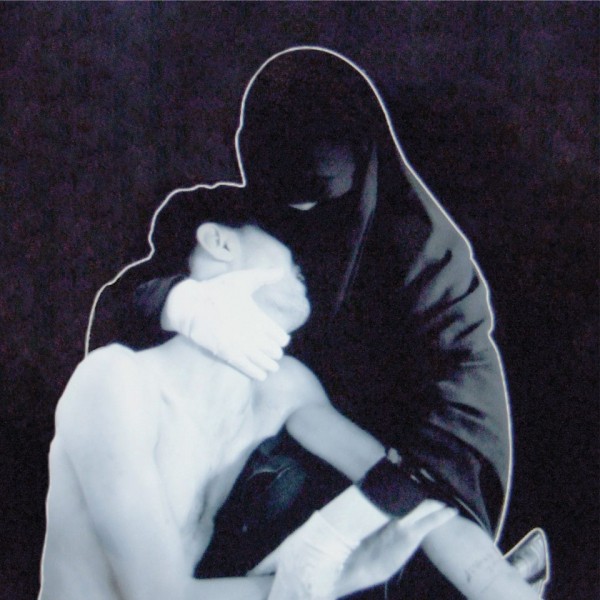
Crystal Castles IIIThe cover of Crystal Castles‘ third record (III) features an emotional portrait captured by photojournalist Samuel Aranda, of a woman named Fatima Al-Qaws holding her son Zayed, in Yemen, after he was exposed by tear gas during a street demonstration in the latter quarter of 2011. The disc itself features the same image. Meanwhile, the rest of the image is texturally dark, weary of light colors except for the white text inside the album booklet that, for the first time in Ethan Kath and Alice Glass‘ discography, features the lyrics to their songs.

While the minimalist artwork isn’t a large stray from the direction of their previous release Crystal Castles (II)(III) finds itself living inside of its paper thin, dismal walls. The record circles through a world of sociological turmoil, while digging deeper at the seams of the miserable gloom that’s stood at the center of the duo’s work since their self-titled debut album. Where the predecessors offered instrumentation that could stray the listener from the haunting underlying of “Celestica” or sensual stability of “Crimewave,” (III) approaches its subject matter in the utmost mature manner possible. It’s a refusal to sugarcoat, an urgent standpoint, and an adamant call toward a core emotion.

Outside of the album’s musical and aesthetic necessities, Alice Glass followed up the intent of its content in an interview with NME. She stated, “There’s lots of themes, but feeling, like, oppressed… A lot of things not personally happening to us, since the past record, but people we know, kind of profoundly influenced everything. Like, I didn’t think I could lose faith in humanity any more than I already had, but after witnessing some things, it just… the world is a dystopia. I’m one step away from being a vigilante. I’ve thought about it.”

Vigilantes or not, Glass and Kath carve a world full of isolated conflicts and aptly begin the record with a song that, by definition, means a disastrous evil or affliction or unwelcome outbreak. “Plague” is the beginning and lead single off of the band’s third project and is one of the strongest, most dynamic cuts from the record. It’s distorted growls are doubled through the stereo image, while a synthesizer lead is slowly filtered into the mix through eight measures of build up. Then, it’s full frequency spectrum comes into place, with lower instrumentation fattening up the mix and a quarter note kick drum aiding direction to the end of the track’s introduction.

Through song structure, Kath, along with additional production and synth work from Jacknife Lee, weave a rise and fall atmosphere with heavy focus on layers through bridge and chorus work, while verse song structure remains almost bare. It’s the song’s final minutes where Alice’s vocal calls are smartly layered at the center of the mix, causing chaos through reversed vocal calls and forward ad-libs that an intense moment of anxiety is brought forth. After a brief pause in instrumental density, Glass is processed through a time-stretched piece of gear and harmonizes beautifully with a lower piece of whole note ending, which leads into the final chorus and climax.

Lyrically, Glass wastes no time getting right down to human injustices. In the bridge, which is repeated twice in “Plague’s” nearly five minute run, she attacks viciously with the lines “virgin cells to penetrate, to premature to permeate. They can’t elucidate, never thought I was the enemy.” Quickly, the hook plainly represents plain focus with a one repeated phrase: “I am the plague.” Unabridged accusations of social corruption, under inklings of an almost pedophilia infused metaphor accurately kill two birds with one stone and steer controversial subject manner to the forefront, without being too overbearing.

Crystal Castles Plague

Under-engineered percussion samples fuel the beginnings of “Kerosene” and repetitively carries forth an industrially hypnotic, highly synthesized, but light on layers universe. The bulk of the second track on (III) relies on this stagnant bearing, only drifting from it’s structure core during small breaks between verses and the end lines that spell out opposition and offense of the dishonesty and impurities discussed through most of the record. “I’ll protect you from all the things I’ve seen.”  is the next to last line, which is complimented with a complete beat drop, left with one lone synth. It’s arguably the most powerful phrase in this Castles release, with enunciation clear and focused. “Rinse them with saline, kerosene.”

The aforementioned line is stated again through a cappella, then leads right into the opening measures in “Wrath of God”. Intriguingly, the commencement of the third track is optimistic, almost a gleeful introduction, but the facade of happiness ends after three musical stabs that are corrupted throwbacks to the 8-bit influences of their good spirited debut record. Warning of being stripped from your heritage, the song closely runs with the theme of (III) and reaches a gorgeous “Plague” plateau during vulnerable layers of pitched vocal samples and distorted mayhem, ending with a lone, helpless yelp.

The first three tracks on this record are a trilogy within themselves. They’re re-assurements of a black skied spectrum of frequencies and trance-structured electronic-pop music. It’s full of parallel compression in which the kick drum is sent to an aux, which is sent to certain instruments in the mix, and pushes them down in volume. While this is currently a trend in the EDM music scene (and elsewhere), it’s oriented on the Crystal Castles project as a means to present emotional depth through production technique and is executed greatly, for the most part.

In the same NME interview broached earlier, Kath brought up the fact that most of the songs were recorded in one take “because we believe the first take is the rawest expression of an idea.” It’s a creative use of the punk movement that’s rarely explored in Electronic music, but also hinders (III) from diversity. The majority of the synth work and overall structure of music on the record is not derived greatly from one track to the next. While there are plenty of albums that do this in all genres, it’s a move that causes this project to sometimes sound like a redundant cycle of rehashed elements. While it certainly exerts itself toward an attitude of cohesion, and lands itself as one of the most cohesive records released in 2012, the inactive structure does seem to tire from time to time.

Keeping in line with the punk attitude, three songs on (III) are not even mixed. Yes, you read that right, they’re not mixed.  “Insulin” works great as a follow up to “Doe Deer” from Crystal Castles (II), in that it’s incredibly distorted, incomprehensible at times, and if it weren’t for the printed lyrics, we’d all be lead to believe that Glass was just repeating the word “Deathray“. They did it well though. The record stays at about an average of 6dB of dynamic range, though a lot of the songs do dip into 7dB, and one time a healthy 8db (on “Telepath”)!

“Sad Eyes” is another track in which Jacknife Lee lends production/synth work too and is the most pop driven cut on the 2012 release with accessible lyrics and presents itself in traditional composition that’s landed itself on universal critic and fan praise.

Another unmixed track is “Mercenary” that falls inline with hip-hop influenced percussion structure and could be a sibling track to the more polished “Affection” which draws from the same urban influences. “Pale Flesh” is also derivative, but  leans more Trip-hop.

(III) ends in the way all Crystal Castles albums end: with a slow lament. Also unmixed, “Child I Will Hurt You” summons an ambient, minimal synth-bell adapted formation. It’s delicate, snow-like, and an innocent reflection on the tainted, unlawful substance and tyranny revealed through the duo’s third effort. One worth putting on repeat during a depressing evening and while the chorus is gloomy with its “foray forever” repetition, it’s faithful to truth, a realization in regards to the conscientious atrocities on this Earth.

While three does contain monotonous moments, it’s full of good intention. Accurately, Crystal Castles continues through darkness with their musical kaleidoscope of social issues, shining a light on unscrupulousness, misconduct, crooked values, and portraying the specimens in relentless and fearless approach. Even at its low-points, (III) demonstrates substance in Electronic music at its best.


Purchase (III) by Crystal Castles [iTunes]
Purchase (III) by Crystal Castles [Amazon]
Purchase (III) by Crystal Castles Vinyl [Insound]

Posted in album review | Tagged , , , , , , , | 2 Comments

Peter Rauhofer Puts Spin on Tori Amos Track With “Flavor” Remix Release

Tori Amos Flavor Peter Rauhofer

Tori Amos is no stranger to releasing singles or remixes, but it’s been a while since she’s put the dance hat on. While after over a decade since it’s release the “Professional Widow (Armand’s Star Trunk Funkin’ Mix)” is still split between mass praise and critical critique, Peter Rauhofer has offered several remixes to Amos’ “Flavor” (originally from the Abnormally Attracted to Sin album) in order to continue promotion of the orchestral single release from the album Gold Dust. Our review of the album, in collaboration with OTM can be seen by clicking here.

The “Flavor” mixes are more minimalist compared to the progressive floorstompers we’re used to hearing Rauhofer offer on his signature reworks of Madonna music, but still maintain the integral dance offerings Peter’s given to artists since the beginning of his career (side note: one floating gem we love is the “Just A Little While” remix he did for Janet Jackson [YouTube]).

The reason for the minimalistic approach seems to be to ensure that a focus is still strongly on the lyrics. They’re all present. “Flavor” demonstrates extreme versatility in its remixes, original album version, and orchestral presentations. So many different aspects of the song have been presented, all adding different outlooks on the original songs intent. Different flavors.

Also, doesn’t Tori Amos look beautiful on the cover? We like this digital remix package all around!

The only thing missing is the Tara Busch remix.

Purchase “Flavor (Peter Rauhofer Mixes)” by Tori Amos [itunes]


Posted in track review | Tagged , , , , , , , | 2 Comments

Sia Sings “Diamonds” by Rihanna At The Norwegian-American Achievement Award Ceremony

It’s absolutely no secret that the Rihanna success “Diamond” was penned by Sia. From the vocal phrasing, to the emotional and melodic structure, it screams something that the songstress would use segments for for a song of her own. We’ve touched upon how similar the end Rihanna result sounds like Sia in our review of Lotus (click here) and now we have her prestigious rendition of the song!

“Diamonds” is a live performance given by Sia at The Norwiegan-American Achievement Award Ceremony on November 28th, 2012 (this is all pending information received by the original YouTube upload). While the Rihanna version is certainly a wonderful version of the track in its own right, we’re happy to hear the original songwriter and singer breathe a different life into it. An incredible talent and one deserving of all of the opportunities that come her way.

Bravo, Sia!

Posted in Video | Tagged , , , , , | Leave a comment

Infrasound: Wet Eyes

Wet EyesBased out of Minneapolis, Minnesota Ross Auger has been involved in multiple projects spanning from collaborative rock efforts, to upcoming Hip-Hop sonics, and a strong focus on his own infusion of genres through a solo pseudonym called Wet Eyes. Previously, 2020k held a double sided interview with Auger upon the release of his latest effort Freezing Thoughts Create Stability. The entirety of the interview can be read by clicking here and in it, discussions about differing endeavors and passionate elaborations of work outside of music were detailed and a sense of versatility and talent were published.

Venturing further down the creative slope offered by Wet Eyes, we have an October released Electronic record that dips into post rock and ambient terrain. Freezing Thoughts Create Stability is a record largely indulged in atmospherics and guitar layers that construct melodies which lay over top of delayed and reverberated notes. Background drones are and guitar pads are created in portions that lay underneath the main tracks as a whole, allowing songs to have a great deal of depth and perception inside their playing fields.

“7 To None” takes a more traditional approach to melody and almost sounds like it’s going to drift off into a standard rock area, but continues progressing through added guitars and bass layers. Reverberated claps are brought in midway through the track to create a sense of vibe, but are quickly dropped at the songs end, creating a rhythmic absence and an ease in come down from the unexpected experimentation.

Demonstrating versatility comes with the following song, “Bug In Amber” which is largely a drone piece, complete with delayed guitars that ebb and flow through the songs left and right channels while small synthesized bits drift in and out of them as well. There’s a lot of different ideas and noodles that progress within Wet Eyes records and constant change comes easy and welcome because it’s done through evolvement, not with sharp changes.

Cohesion continues as the minimal percussion samples and lyrical use used on the album’s opening song “Coyote’s Mining” is continued through “Geoglyph”. They’re both in a way, an interpolation of Alternative Electronic music foundations and Post-Rock structure.

Almost nothing on Wet Eyes records seem perfect, in fact, the majority of the sounds arranged and recorded on the albums remain experimental just based in the fact that they aren’t quantized in the slightest. Off beat percussion, rhythm, and melodies obscurely build and base themselves purely on the human effort put forth into them during the time of consumption and recording. Even the mixing techniques on the albums aren’t of spectacular depth, but rather of stripped and minimal approaches. Stereo imaging through rhythmic panning is key on “Volatile Machines,” but for the most part it’s lightly compressed and left to be turned up or listened to quietly. Equalization is used as a means to create sonic niches for the tracks within a track, ensuring no sonic fighting is taken place, and because of this causes an interesting grit and purposeful muddiness to the overall mixes that are reminiscent of a nostalgic aspect of music that’s geared more toward song composition and structure as an alternative toward pristine production that outshines songs that are already artistically flawless.

The most polished aspect of the latest release from the Minneapolis musician would be the two closing tracks. “The Owls Are Not What They Seem” create repetitive ambience in build up for a beautifully layered “Honey Go Downstairs,” that combines rhythmic and melodic structure that lends itself more in a land of Trip-Hop music or something you’d hear as a more beefed up Tosca or Morcheeba track.

A more Boards of Canada vibe finds itself on a more ambient based album called Air Is Movement, particularly on “8 Fold Flower” in which a heavy noise floor follows a repetitive rhythm that subtly builds and beautifully displays a song that plays upon backwards aspects, and little beeps and squeaks that find themselves hiding in the background. “Slow Sift” also gives its way to something of a shoegaze inspired version of the Sandison brothers.

“Settle Down” demonstrates the willingness to compose and play in a more hypothetical world where music theory lends itself to complicated sheet music because of the instrumentation in each instrument being skewed from itself. Eventually, the track comes together in a song that’s reminiscent of something of a more progressive version of  Royksopp’s Senior album, while “The Let Go” throws itself into a frenzy of delayed guitar that could make its way onto an The XX project.

Outside of recording, Auger has released projects with Electric Gauge and Electric Aquarium as well as several other bands and artists that you can explore through the Wet Eyes Production Bandcamp (click here). Currently, the Production based record label of sorts is a way for Ross to round up his collectives and distribute them through one outlet, and in our interview it seems bound to stay this way. It’s almost a standard way for artists to place their work out is to start up a record label themselves, so this move is one to follow and continue watching its sequence of events and releases through the years.

The creative bounds and limits are only surface scratched through the article we’ve published and are best admired and looked more deeply into through the media and release outlets Wet Eyes has set up for distribution. The Wet Eyes Bandcamp holds major releases and special, limited edition prints and physical copies, while Ross Auger’s Soundcloud currently contains ten tracks that have been put together and distributed sparsely from the account. You can also catch up with the Wet Eyes project through the official Facebook page and Twitter.

We’d also like to announce that Wet Eyes has taken a stab of the 2020k song “Contagion” and will be featured as an artist who has remixed the track on an upcoming single EP for the song. The single should be released in the beginning of 2013. (For now, you can download the EP version of the song through the official 2020k Bandcamp page by clicking here).

Below, you’ll find “Travel Through” which is a video put together and uploaded to the official Vimeo page. It’s one of the more intense pieces out of the four that are currently featured and our favorite. Wet Eyes certainly leaves an emotional mark in genres of music that seem to be thrown toward a cesspool of mediocrity. This is different. This is emotional lo-fi brilliance at it’s absolute best and we cannot wait to hear more from Auger in all senses of the artistic and creative worlds he’s involved in.

Posted in Uncategorized | Tagged , , , , , , , , , , , | 16 Comments

Album Review: How To Destroy Angels – An Omen_

How To Destroy Angels An Omen Cover

When Nine Inch Nails frontman Trent Reznor originally announced a musical partnership with Mariqueen Maandig and Atticus Ross for a self-titled EP, puzzling and conflicting opinions on how the collaborative effort would pan out furiously surrounded the band. Upon the release, outlandish critiques were squashed as the Extended Play offered deeply soaked downtempo-electronic vibes, mixed with the standard songcraft that made Nine Inch Nails its driving force. How To Destroy Angels seemed to be delivering an underlying Trip-Hop inspired record that’s always been buried beneath the purposefully aggravated tracks in NIN’s discography and because of it, a follow up was largely and eagerly anticipated.

The Sophomore approach, An Omen_ contrasts the original release puts through an effort made up of experimentation and subtleties. Where the debut focused on accessibility and lyrically based creations, it’s processor deviates in pure opposition. While the follow up still maintains a formidable mixing focus on lead vocals, the six tracks exert themselves to demonstrate an equilibrium of sonics that interpolate the aforementioned details while integrating scatters of cinematic inspirations drawn from recent projects.

“The Loop Closes” is a smartly executed track that builds from instant rhythmic layers, drones, and accessibility. In a way, this track is the epitome of the EP. Dark dance vibes surround the indignant filled vibe through pale four-to-the-floor kick and snare that make its way into a Social Network and Girl With The Dragon tattoo juxtaposition.

“The beginning is the end, keeps coming around again” proclaims Trent, with Mariqueen harmonically following suit. The most intriguing portion of these vocals are the manipulated and distorted vocals that come in every so often, as the male vocal is panned low, but seems to contain a layer which is bumped in the lower frequencies to give it a unique and creative growl – perfect bass effect!

How To Destroy Angels An Omen

Continuing on through the more instrumentally based segments of the record, “The Sleep Of Reason Produces Monsters” creates itself to exist as the most monumental creation. It also sits at a healthy average dynamic range of about 8dB, which makes complete sense as there’s no palpable palette for aggressively mixed aspects to flourish. “The Sleep Of…” begins with a minimalistic synth melody before a sixteenth note melody fades in over top of it and focuses at the forefront for the majority of the song’s run. With aiding Maandig adlibs, everything continues to build off of a droning bass vibe that makes its way through the song. This is the most 100th Window (Massive Attack) sounding track on An Omen_ as it’s highly electronic, highly produced, in the box sounding, but wonderfully mixed to give a humanistic and emotional tone to it. During its four minute and a quarter run, the song is treated like “The Loop Closes”, in that it’s composition is forever evolving and infinitely creating tension. While the song certainly provides little glimmers of hope that shimmer and shine through synth melodies, they’re eventually taken by a cough, overpowering drone, and finally an abrupt end to the track.

Backtracking through An Omen_, the lead single from the Columbia Records released project, “Keep It Together” is occupied with manipulated percussive samples that are uniquely panned, delayed, and reverberated as a way to give forth a stereo image of which the low/low-mid frequencies of the synthesized bass thrives upon. As with most songs through How To Destroy Angels’ beginning catalog of music, Mariqueen’s vocals are intelligently recorded through a Blue microphone and bumped up in EQ in the higher frequencies. This sort of recording technique allows for a contrast in sonics that distinctly separates voice from instrumentation but uniquely allows the mix to stay together.

Lyrically, HTDA isn’t too far of a stretch from Nine Inch Nails. We’re still zeros and ones in “Speaking In Tongues” and we’re still anxiety ridden in it as well. However, this is the pessimistically aimed songwriting style that’s become signature to affiliated Trent Reznor-isms and is a vernacular world that’s always vague, evermore abrupt, and constantly praised. With the aid of a vocoder, Trent gives an extraordinary performance on “On The Wing”, the album’s most light sounding production. A tale of despair obscurely unviels itself through “I hear the warnings on the wing, I don’t believe in anything. I hear the voices rise and sing, but I don’t believe in anything.”

The most remarkable aspect of the band’s sophomore effort comes from the folk-ridden, guitar and back-mixed pad based “Ice Age” It reckons strongly on nominal instrumentation, allowing for basics and indistinct song structure to coyly reveal itself through each listen of the record. “Sometimes the hate in me is keeping me alive” laments Mariqueen while asking the ocean to wash us all away.

Along with the music, Rob Sheridan creates stunning analog Electronic art that you can easily follow along through his Facebook and Twitter profiles. They’re insightful and often comical updates with status updates such as “Way to go, Rob, set a visual style for How To Destroy Angels that requires you to run an image through an iPod to a VCR to a CRT monitor and then photograph it every time you need to do something as simple as add some text to the website… Seemed like a good idea at the timne.”

In a way, Sheridan’s creative direction through the photographical aspects of How To Destroy Angels demonstrates the mood set by the band, which is probably why he’s included as a member of the collective as opposed to just the visual sidekick he’s credited under through the Nine Inch Nails platform. As Electronic and despondent the band is musically, Rob lends himself to making painstakingly accurate and perceptible representations of art which equate and relate the senses generated through sound and into the visual world.

It’s the accessible melancholia, revamped through new mixing capabilities and genre bending triumphs that gives An Omen_ its shine and keeps us on the edge of our seat and begging for the full release which is slated for 2013. In keeping up with this band, hints of a tour have also been sprinkled through the press here and there. It’ll be interesting to see how these songs would be presented live because the band is so electronically influenced. The drum machines, the synths, the manipulations are all what makes How To Destroy Angels and An Omen_ a superior release. Things look promising, sonics sound pristine, and An Omen_ is something that we hope is an actual omen of what’s coming next.


Purchase An Omen_ [Howtodestroyangels.com]
Purchase An Omen_ [iTunes]
Glitch Art by Rob Sheridan [Robsheridan.com]

Posted in album review | Tagged , , , , , , , , , , , | 6 Comments

Robert “3D” Del Naja From Massive Attack Announces Battle Box Project With Guy Garvey

Battle Box

We really have no idea what this is, but we pre-ordered it because we’re still salty about the Massive Attack vs Burial Paradise Circus/Four Walls vinyl not being released digitally in 2011. Also, it’s Robert Del Naja and from what we can tell the new project, it features vocals by Guy Garvey (who collaborated with Massive on “Flat of the Blade” on Heligoland) “from Elbow and is going to be aesthetically interesting.

Simply titled Battle Box 001, The Vinyl Factory is describing the release as “bass-heavy electronic masterstroke reminiscent of Massive Attack at their most sonically adventurous.” This is literally all we know, but judging from it, it sounds like we’re going to get some awesome 100th Window vibes!

The Battle Box project will be released on 180-gram heavyweight white vinyl and the first 30 pre-orders will receive ndividual sleeves made by 3D – 15 drawn in Biro, 15 with Paint Pen, all signed. The first 30 have since sold out.

For more information on this, please visit The Vinyl Factory page and blindly pre-order it like we did. The worst that could happen is it’s “Light My Fire (Live)” from the Protection album on repeat, so what are you waiting for? Click here and see what it’s about!

Posted in Sine Wave | Tagged , , , , , , , | 3 Comments

Album Review: Christina Aguilera – Lotus

Christina Aguilera Lotus Album CoverChristina Aguilera does not hold back on her versatility in regards to the diverse list of influences that drives the singer to create an outstandingly eclectic catalog of music. From the pop, latin, and urban influences of her self-titled debut record and Stripped, to the jazz leverage on Back To Basics, and Electronic inspired Bionic, her discography cannot be characterized as unchanging. It’s forever in a state of metamorphose, at times schizophrenic, but always deliverable and distinctly pipelined by the unmistakable voice and distinct amount of creative input that clearly shines on each release by the RCA signed artist. Lotus continues down this walkway by exploring a clean 2012 dance basis, while occasionally drifting into various sub-pop territories, but perceives itself to be the most approachable pop record since her 1999 debut.

Beginning Aguilera’s release is an Alex Da Kid introduction aptly titled “Lotus”. At three minutes and eighteen seconds, the song plays more like a full song with lyrical circles. Autotuned vocals demand full attention as they blend perfectly with programmed rhythmic sections and jubilant synth instrumentation, exacting the listener with triumphant vibes as lyrics flow through looped callouts, harmonic melodies and a proclamation of a re-birthed creature, that’s been submerged in pain, broken, but manages to stand strong.”Emergency, heart beat increases. Lotus, rise up. Rise, this is the beginning.” It’s demonstration of certainty makes for the intro to be a powerful opener. It surges through repetition, but evolves slowly through it’s production.

Unfortunately, technical problems start on the first track of the record and run untamed through almost all songs on the standard and deluxe releases. Distortion and an unbalanced low end makes itself ironically clear at the first bass note and conflicts with the entire mix, making itself omni-directionally known and drowning the mid and high frequencies out, or forcing them to be compressed or automated downward so lower frequencies can take complete control. It’s a wretched mishap that we’ve seen earlier this year through Madonna’s MDNA mixing and mastering (our review is here), however, the Madonna record had moments in songs where breathing was possible, whereas Lotus does not.

In fact, Lotus’ dynamic range as a whole sits at a repulsive and repellant 4dB of range. Only “Your Body” and and “Blank Page” allow for the broader confines, but even they’re only averaged out at 6dB between the loudest and softest segments of their durations. To put this into perspective, the Red Hot Chili Peppers infamous brick walled Californication sits at an average dynamic range of 5dB. Christina’s record is crushed more and to make it worse, its limiting and compression techniques are extremely noticeable.

For example, the country-pop ballad “Just A Fool (Featuring Blake Shelton)” is audibly distorted on both singers vocal recordings. Even the main guitar line, though equalized to shine in the high-mid frequencies is unmistakable in its strain to enforce pronounced loudness to the point of an unnatural sound. Any time Christina or Blake attempt to belt out a note or enunciate an affliction of vocal skill, it’s hindered and tarnished through an irresponsible rate compression that forces their recorded takes to become atypical in sound and freakishly consistent in sound level. Where “Just A Fool” could have been a successful collaboration in cross-genre exploration, it fails completely because of the final  product.

The facet that makes Lotus so disheartening is that none of this is at fault because of the artists involved. Christina Aguilera is one of the undisputed voices of this generation and her collaborators are critically acclaimed, diverse, and positively renowned. Whether it’s at the hands of Manny MarroquinChris Galland, and Delbert Bowers who mixed the record at Larrabee Sound Studios or mastering engineer Brian Gardner over at Bernie Grundman Mastering is up for debate. Album mastering can only be as good as the headroom and original range given by the mixing engineers, but things to keep in mind are also demand from RCA Records in gauge of how they’d like to present this pop record to the general public.

Something interesting to keep in mind is the disappointment of Aguilera’s previous record Bionic. It’s lead single “Not Myself Tonight” didn’t even crack the top 20 on Billboard’s Hot 100 chart and all other singles and aspects of the era fell by the wayside. A canceled tour followed, a box office failure alongside Cher for Xtina’s acting debut in Burlesque. Also, combined with constant false accusations of snubbing Justin Bieber and being rude to The Wanted on NBC’s The Voice, quite a negative firestorm surrounding Christina as a whole seemed to be negatively impacting almost every aspect of her career, and unjustly so. Because of this, it’s not unlikely RCA wanted to release a record jam packed with the most barbarically safe, radio friendly sound, and unknowingly so, forced the project toward maximum sound limits.

Songs “Sing For Me” and deluxe edition track “Light Up The Sky” fall hard to these technical complications, but are somewhat saved through the sly use of reverberation so that the vulnerability and emotional viewpoints elate and shine, though they still barely hang on because the reverb is also highly compressed.

The truth for the sonic degradation, however, is behind closed doors and what can be focused on about Lotus is the positive song craft and artistic skill. Recent songwriting collaborator and all-of-the-sudden go to songwriter Sia partners with Aguilera again on this project with “Blank Page”. Where Rihanna recently recorded “Diamonds” and Ne-Yo released “Let Me Love You,” both of their records are undefined in that the vocal structure and melody sound like Sia recordings sung through another voice. Christina has a way of collaborating with the Australia based artist in a way that allows a combination of emotional Sia-isms with a unique vocal presence and articulation that strays from Sia and is undisputedly all Christina.

“Let There Be Love” becomes a double-edged sword. It’s the song with the least amount of dynamic range (averaged at a disgusting 3dB), but is the most accessible track that combines the most top 40 influences of dance music, simple percussion, and easily accessible melodic progressions. The Max Martin and Shellback produced track urges standardly sexualized lyrics (“I wanna tell you my secret with just the sound of my breathing”), confidently repeated and quantized background vocals, and an explosive chorus. It all builds to piece together a track that could easily be placed alongside pop tracks on a Nicki Minaj record or David Guetta feature track. The lead single off of Lotus, “Your Body” falls in line with the attention grabbing instant brought on with “Let There Be Love” in that it’s simple, but effective. 

Speaking of Nicki Minaj, she’s the only thing missing from the Reggae and Jamaican tinged “Around The World”. The entire track desperately pleas for a feature from the successful it-girl, but manages to successfully flow on its own with its complicated snare track and shout outs to previous Xtina hit “Lady Marmalade”.

“Circles” and “Shut Up” aggressively confront humanistic negativity, while “Army of Me” and “Cease Fire” contrast entirely as self-confident anthems that continue what began on the Stripped album with “Fighter”.

Truth is, it’s hard for Christina Aguilera to win. If she’s not being bashed for her wrongly perceived personality, there’s a side of supporters that dislike when she strongly demonstrates her vocal ability and when she tries to tone it down (as shown through the Bionic era) others will complain about that as well. There’s a miserable amount of different standards that powerhouse vocalists must attempt to jump through and even when most are avoided, there’s another complaint waiting to be thrown their direction. Through problematic behind the scenes issues regarding the mixing of Lotus, it’s a great record otherwise. Lyrically, vocally, collaborators, producers and songwriting teams lend themselves as strong allies to the ever growing discography of the singer’s career and Christina takes a fighting stance, standing tall on her own, and becoming the epitome of what a Lotus is: indestructible.


Purchase Lotus [Amazon]
Purchase Lotus (Deluxe Edition) [Amazon]
Purchase Lotus [iTunes]

Posted in album review | Tagged , , , , , , , , , , , , , , , , , , , , , , , , , , , , , , | 4 Comments

2020k Presents: An Interview With Esthero!

Esthero

“It just felt good. It felt right. It felt like “well, okay..show them your heart”. Lyrically, it’s a lot more literal and it’s not that it’s less poetic, but it’s a different kind of poetry.” – Esthero on including lyrics in the Everything Is Expensive booklet.

When 2020k was granted permission to interview Esthero, who is inarguably one of the most versatile artists in the recording industry, we were floored. Not only have we been following the self-proclaimed Pink Pirate since the beginning of her career, but the new record Everything Is Expensive quickly became one of the best engineered and written albums we’d listened to in 2012.

Normally, written print articles with the singer are short, sweet, and to the point, but our conversation was anything but. Laughs, lighthearted jokes, serious discussions about the album, and intriguing talk about Brandy changing the molecular structure of Esthero’s body greatly fueled the 30+ minute look into the life of an industry veteran and we’re more than happy to present to you.

We also had a small discussion about Breath From Another that will be featured here in 2013 when the record celebrates its 15th year since its release. We’ll be celebrating with a flashback entry dedicated to the album and some more of Esthero’s words!

Read our review of Everything Is Expensive by clicking here and check out our great conversation with Esthero below!

Congratulations on the release of Everything Is Expensive. It’s a great record and it’s been seven years! How does it feel to finally have the album out and ready for the world to hear?

[Starts with a pondering “hmmm!”]  I guess it’s a little anti-climatic because you make it all about – you know, I’m kind of living in my own little universe where it’s like such a big deal to me because it’s everything and it’s all I’m doing [laughs] and there’s all this tension surrounding it. Then you put it out and it’s like “…K, it’s out!” and then in that week my life hasn’t changed, you know? But, life just continues on and it’s out now and it’s like the same as it was before, but now people have it!

In terms of looking back on the recording process of the album, you kept the personnel of the project to a minimal. It definitely shows how intimate the creation of the album was through your songwriting, as well as sonically. Was it a conscious thought to keep the team small or was it more intuitive?

I think it was intuitive – I think I had brought people in for a specific song – I needed certain things and then I found as I was recording each song I was like “Oh, let’s get Gabe [Noel] back in here on this one!” or “Oh, let’s get Deron [Johnson] to come back in!” I just sort of fell in love them – a lot of the players right away – like the first time I hired them and I was like “Oh yeah! That guy! Let’s bring that guy back!” It ended up having this consistency. But, I think not only with their musicianship, but personality-wise I just fell in love with everybody and connected with every one and wanted them around.

That all definitely shines through through the entire record.

They were enthusiastic too! That was the thing, you know players usually come in and they’re like what am I playing? Okay, cool. Handle money, then I’m out and these guys were like “This is really great! If you need bass on anything else..” and were really enthusiastic about it and intimate.

That’s awesome! Usually session players just record and bounce, so you can really see the enthusiasm on the record because of the consistency. Is there a specific moment through the making of Everything is Expensive that sticks out in your mind?

I don’t know – the whole process was really amazing! I think some of the moments that I love the most were like – My bass player Gabe, he’s really funny, and really silly, and really smart and Gabe made me laugh so much making this album. He would do really ridiculous things, he has a great Michael McDonald impersonation, so he would do that all of the time. Hanging out with my engineer Franny [Graham], he was my righthand man. It was sort of like the late nights with Franny where we haven’t slept in 48 hours, going delirious and only the sort of things that could happen after not sleeping – it’s sort of like intimate silliness is always my favorite part and the way you can really get to know another human being when you’ve been up with them for that long. Doing something that you love and you’re willing to be delirious for it.

I remember you did Ustream sessions where you and Franny hung out, chatted, and created. I definitely remember some delirium there and it was really funny to watch!

Yeah, yeah. I also loved the moment where we were all watching Deron Johnson play piano on “How Do I Get You Alone”. We were all just staring in awe at him because he opened up the piano and he muted the strings with his hands and he was plucking the keys and it was such an amazing thing to watch how creative and talented he was. Even Franny was like “I totally want to make out with that guy.”

He put his hands down on the strings, but he was plucking and putting his hands on the strings to mute them. It was fantastic to watch.

After everything was put together and finished for Everything is Expensive what made you decide to partner with Pledgemusic.com instead of seeking a more traditional release method?

That was actually my managers idea and he came up with it because we had thought about a Kickstarter and all that kind of stuff and I wasn’t 100% into the idea of it. I’m not dissing other artists, but I had a personal problem of asking people to donate money to me so I could sell them something? At the time it felt very strange to me. But, once the record was done and it was explained to me like “No! This is like a pre-order. They’re just buying the album you’ve already made.” It allows you to do other things as a result of that pre-order and you get to pay it forward and give a piece of charity, then I was really into it. And I love that it allows you to connect with people. You can make it really fun.

Yeah, it was really fun. No one bought the tattoo though! (Esthero offered to place the initials on her ass of the first person who donated a total of $150,000).

Yeah, it’s still open! If you know anyone with an extra $150,000! I don’t know..I might be willing to give a discount on that.

I’m sure people would jump right on it if it was given at a discounted price..

I just think this ass is worth $150,000 at least, right?

I think it’s worth it. I think you put a fair price on that.

Yeah, it still sits pretty nice. You know? It’s nice. [laughs]

In the same vein as the Pledgemusic campaign: You’ve been signed to Work and Warner Brother Records. But, now that you’re largely an independent artist, you’ve been on both sides of the industry. What’s the biggest lesson you have gained about the business side of the recording industry?

Well, it’s just a lot of work. It’s an extreme amount of administrative work. I don’t have a lot of time for it. Even just maintaining a social media presence can take a huge amount of time, especially on days where things get released. Then, there’s days or nights where I don’t get in the shower and I don’t eat until 10PM. I ask my manager “what do I do when the people expect me to be somewhere?” and he’s like “that’s only if I’m scheduling your day by the hours!”

I just got so caught up with if things got passed out on Facebook and Twitter, like, responding to people, being present and available – and I haven’t eaten, and it’s 10 o’clock, I still haven’t showered, and I’m in my pajamas. Like, how did this happen?

So, there’s that and then there’s also the element of accounting, the math and that can be a little bit overwhelming as well. Me being 100% responsible for paying it and really boring things like mechanical royalties. It’s a bit much, but hopefully I’ll be able to hire an accountant!

Esthero

Hopefully! Everything is expensive though, so…

Suuuuureee isssss..!

Kind of on the other end of the spectrum, you’ve been involved in a million different genres. You created “We R In Need of a Musical Revolution” so how do you feel about the state of the music industry now? What do you like? What don’t you like?

Honestly, I haven’t been paying that much attention. I’m so consumed with my own life, so self-absorbed right now. But, I feel like we got to a point where everybody was like a bionic robot that made you want to dance for a while. You know, okay, cool. My thing is that clearly by my track record I’m not genre biased and I like music from all genres. I go on a song by song basis, but I think that when you start getting inundated with the same thing over and over again, that’s what starts to bother me. Or not even bother me, I just shut off, just I’m not really listening.

I sort of felt like with the war going on that we would have this sort of revolution in music, that we would have a resurrance of singer/songwriter, Bob Dylan types would start showing up and it would be like the ‘60s. Then, I realized that it wasn’t like the 60’s, it was more like the 20’s, like a repetition of what happened in World War I – we want to dance.

Yeah, I waited for that too! Madonna did it with her American Life album but no one really caught on.

Yeah, and the [Black Eyed] Peas gave us “Where is The Love?” and that was kind of the best we could do. But, I feel like we might be on our way out of the 20’s. For example, something like “Black Mermaid” [from Everything Is Expensive] I thought wouldn’t really stand out or have a place in what’s going on right now and it seems to have resonated with people.

Something that kind of shocked me a bit was that in an interview during the Wikked Lil’ Grrrls era you mentioned that you didn’t put lyrics inside the booklets on purpose as a way to have people focus on the music as a whole.

Yep.

However, on Everything Is Expensive the lyrics are present. Is there something that sparked that change?

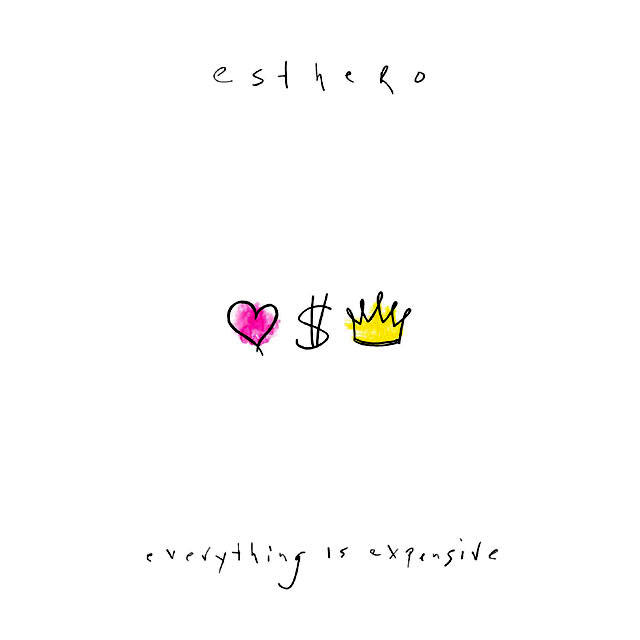
I think it just felt right for this record and I was designing the artwork too. It’s just so intimate, I created this font based off of my hand writing and I felt like because it was so personal, it felt right.

It felt like this is kind of like a diary and I want to put it in and I want people to be able to read it. It felt personal and revealing in someway that my handwriting would be there and it would be interesting, people would be interested in reading them.

It’s always made me giggle in the past too, when people will interpret my lyrics [begins laughing] and uh, they get them – a lot of people get them wrong and I think it’s funny and I don’t want to take that away from them after the fact. [laughs]

It just felt good, it felt right, it felt like “well, okay..show them your heart”. Lyrically, it’s a lot more literal and it’s not that it’s less poetic, but it’s a different kind of poetry.

Definitely. It does feel like a diary. I kind of felt a bit intrusive at first because it’s such a personal record. So, the fact that it’s your handwriting definitely takes that to the next level.

Yeah, I’m going to make that font available to people soon too.

You’ve said “If God was a man he’d sound like a Bilal and if God was a woman she’d sound like Brandy.” You worked with Brandy on “Believer” (an unreleased track originally placed on Esthero’s Myspace page) and you worked on Brandy’s Human album. So, I agree she is a Goddess. What was it like working with her?

She’s awesome! There’s something about Brandy’s voice that quite literally – I’m going to sound crazy, but I think her voice literally changes the molecular structure of my body in some way, [laughs] like in how we know super high notes can break glass.

But, I feel like there’s quite literally something that happens when Brandy’s specific tone resonates in her chest/in her body, comes out of her mouth and hits my ear drum – it does something to me that is beyond my control. So, for example, even if she is singing the happiest song in the world I am paralyzed and want to bawl my eyes out. I feel like a deer in the headlights and I listen to her sometimes and I’m still arrested by her voice.

When we did “Believer” – she’s my friend so I was like “Hey, Bran’. Could you…I wrote the song could you help me arrange the background vocals for them?” because I’m such a fan of how she arranges vocals and I was like “could you help me figure out what they are?” She came and she was like “well can I sing them?!” [laughs] I was like “Uhhhhhh…yeah!” So, I was so excited and I’m getting to fully watch her and produce her and I was also excited because as a producer I was like “I’m going to finally get an inside scoop” because I think she’s a fantastic vocal producer and I’ve been hearing how she’s been executing for years and I was finally going to get to see how she does what she does and be able to appropriate it for myself and learn something, get some tools.

So, as a producer I’m like “I’m going to watch this!” but every time she would turn to sing I couldn’t last more than like, literally, a minute and a half without like getting totally fucking teary and having to leave the room. So, she’s singing and I keep being like “Yeah! Okay! That’s great!” and then leaving and calling my friends crying. [laughs] Her tone is just magic to me.

I think that’s true for a lot of people. There’s a woman than I know who – every time I sing, when she hears me sing live she weeps. She can’t help it. She keeps crying. And she’s a friend of mine and I feel like it’s the same thing. It’s not that she’s a bigger fan of me than anyone else or whatever, there’s just something unique to my tone in a way it resonates out of my body and hits hers, you know?

So, I feel like I have that attachment to Brandy. I feel like there’s something unique about her voice to my chemistry, to my physical make up that just causes me to – it’s like, I don’t want to say it’s kryptonite because it’s not a bad thing but it literally just almost paralyzes me. I just can’t. [Starts laughing] It’s like a dog when you scratch a dog’s belly and it like kicks its leg involuntarily.

[Laughing with] Were you doing that to Oboe [her dog] earlier?

Yeah! I feel like thats what happens…to me….when Brandy sings! [laughing harder]

More on Everything Is Expensive.

It’s really personal, but I hope it’s not too self indulgent that other people can’t relate to it. But, I think sometimes that the more self indulgent you get and the more honest you get, the more people will relate to it.

I have another song that didn’t make the record because I wrote it after. I literally wrote – it was like 3 o’clock in the morning. I was in the bath having a nervous breakdown, just crying my face off. I was devastated. I got out of the bath, I grabbed the guitar, I wrote this song. I had my friend who was staying with me, I played it and was like we’ll just record it on Garageband…I just wrote this, I have to get it out. And it was so specific and unique to me and my situation. I thought there’s no way anybody could relate to this, I could never use this. But, then I listened to it the next day and I realized how universal it actually was in the basic sentiment of the song. So, this album is kind of like that. It’s really personal, but hopefully in a way that’s universal that people can relate to it and feel like they’re not alone, you know?

Is there anything else you’d like to share with the readers of 2020k?

The Pledgemusic page is still going and if people buy directly from me there’s a portion that goes toward The Van Ness Recovery House. There’s still some items available as well!

Purchase Everything is Expensive in multiple formats over at Pledgemusic.com. A part of the proceeds will also go toward The Van Ness Recovery House. The record is also available on iTunes.

Also, please follow 2020k on Twitter and Facebook as we’ll be announcing an exclusive giveaway of Everything Is Expensive in the very near future. You want to win, don’t you? You want to be That Girl (or boy…you see what we did there, right)? Our social media is the best way to keep connected!

Posted in Exclusives, Interviews | Tagged , , , , , , , , , , , , , , , , , , , , , , | 9 Comments

Album Review: Esthero – Everything Is Expensive

Esthero Everything is ExpensiveThroughout the seven year wait for follow up to Esthero’s sophomore release Wikked Lil’ Grrrls, the eclectic artist openly shared her creative moments and life experiences through social media outlets. A blog over at Estheroinprogress.com chronicled YouTube videos of her dog Oboe and heartfelt messages to her family, Myspace found the songwriter selling individual tracks for the price of a Starbucks beverage as a way to give back to fans while she was on unsigned downtime, and  her Formspring/Twitter enabled the closest interaction since the Swallow Me mailing list. Amongst the communication, news of an upcoming album was mentioned but wasn’t fully brought to anticipation until live stream sessions with herself and recording engineer Franny Graham were broadcasted via Ustream. A few months later, an announcement was made that a new website was launching, and a lead single (iTunes) was kicking off the release of a highly anticipated record titled Everything Is Expensive.

In regards to the campaign and promotion of this record, it’s been very hands on for the artist. To receive enough funds to put the record out, a Pledgemusic.com page was put together in several packages (ranging from a digital download of the album, to a signed physical copy, all the way down to silly finger paintings or playing UNO with her in a Los Angeles coffee shop) and pledgers were able to listen to tracks from the record before it was released/see the album’s progress as the final stages were placed together. In true life imitating art fashion and vice versa, the financial struggles and triumph were presented uncensored  and contributed an impeccable and realistic backdrop for the album to reveal itself on.

The melancholic state surrounding Everything Is Expensive makes itself apparent with the opening “Crash (Prelude)” that combines a gorgeous organ crunch, subtly panned through the left and right channels making for a fantastically widened stereo image when it’s combined with the doubled vocals. Later, the same song makes an extended appearance under the same title with featured guest Jonah Johnson. Where the euphoric version of the prelude left chord progressions beautifully flowing through string instrumentation, the latter sinks itself into a more standard guitar and piano dominion, providing necessary emotion through conservative song building which intriguingly weaves its way through contemporary genres. It also glides through reminiscent country glimmers and a soulful build toward the middle of the track that urges to “come out in the sun when you’re scared and facing down”. 1970’s influences are abundant, but offered in an upgraded and intense passion. Though different in arrangement, both versions hold a zealous state of purity that’s mentored by it’s pristine song writing approach.

In many ways, “Crash” sets the mood of the record and it’s downhearted hope continues through stripped compositions like “Black Mermaid” and “Over” which both hold a strong focus on doubled guitar melody and layers. They rely on benchmark recording techniques – that is slight reverberation, simple delay and frequencies meant to slightly give a piece of a song a niche to fit without fighting amongst other pieces of music.

Delicacy is key throughout Everything is Expensive’s entire run and is greatly shown through the mixing and mastering process. In fact, the lossy 320kbps MP3 download through Pledgemusic.com shows the record sitting at a healthy 7dB of average dynamic range, with some songs dipping into 9dB and 8dB of average range (please keep in mind that this is not a lossless reading as we’re still waiting on physical copies to arrive).

The mixing is quiet, the arrangements are wholeheartedly relied on the technical and creative skill of the musicians themselves and the written song anatomy. All aspects seamlessly gel together to aid one another, instead of heavy compression and other song mixing techniques. The songs all come together without an engineering flaw and is a breath of fresh, headroom and dynamic range space and air.

The manifest for this album makes no secret of diverting away from the Trip-Hop atmosphere that built Breath From Another into a late 90’s Electronic success and strays more toward the organic tracks from Wikked Lil’ Grrrls. One could argue the sound has drifted completely, but if you listen to the three records in succession there’s an undisputed growth and maturity that’s blossomed and harvested itself into Esthero’s musical career as a whole. “How Do I Get You Alone” is a highly layered and obscurely produced track written by Esthero and Ricky Tillo that interestingly brings together plenty influences that have been demonstrated through her catalog. Autotuned and natural vocal layers throw back to her songwriting on Kanye West’s 808 & Heartbreaks  record, while maintaining an Electronic vibe that whispers in augmentation of her debut album. The Electronic vibes of the track also fully blend with the organic bass and muted piano to combine the Junglebook vibe which was mastered during the sophomore endeavor. It’s a summary of sorts and it’s call and answer toward the end of the track during the “you could really see her light up” lines build the song to it’s climax before coming down quickly and seems almost incomplete until the final chords and notes are pressed, and then faded out.

Esthero

“Never Gonna Let You Go” is an earlier track and lead single off the project that erupts in uncontaminated pop fashion and recalls the title track to Wikked Lil’ Grrrls in it’s bratty, relentless, honest fashion to its success in combining unadulterated swagger and power into relationship conflicts and ones self. While synths and a predominant kick and clap make themselves known the most, it’s still surprisingly a bare arrangement that has a simplistic rhythmic section, allowing it’s melodic structure to freely distribute itself in jazzy fashion through the track while Esthero confronts a man on an uncertain direction of love via brute lyrics like “So who’s that lady I just saw you with? You said it was your sister, but you’re full of shit.”

Intimate confrontation takes hold through “You Don’t Get A Song” (in which she tells someone to go fuck themselves quite forcefully). “Go” settles down and in introversion tendency she challenges an ending piece in life where she admits someone’s need to let go of her so they can find what they need, “you won’t find it in me” she states to the chorus’ end and continues through a second verse directed at inward introspection.

“Walking On Eggshells” presents one of the more abstract song progression and teeters between commanding snare rolls amongst organ whole notes and laid back guitar strums before exploding with electric guitar stabs, excessive supporting rhythmic sections and distinguished chord progressions that fuel an emotional outlet that states “can’t stand the state I’m in. Can’t stand the pain you give, it’s like I’m walking on eggshells.” An all-out rock-out session throws itself through the track a few times through the “So I walk, yeah, I walk, yeah I walk alone” segments. In complete opposition, “Supernatural” makes a sterile and accessible development that recalls sonics that would be concrete for a Max Martin pop/rock production (think newer P!NK or Kelly Clarkson single releases).

The most stunning and beautiful track on Everything is Expensive is the vulnerable, ingenious title track that works its way through flanged guitar lines and doubled, harmonized layered vocal techniques that asks “how much would you pay for a friend?” while upgrading concepts covered in “We R In Need of a Musical Revolution” with broader lyrics “And if i dole out my good name, would you give me the correct change? Sell your soul, sing a song. Sell your soul, play along. Never change.” Through a brief guitar solo and harmonized vocal counterparts and another verse, a straight-forward, subdued rhythmic section interestingly drives “Everything Is Expensive.” As piano and guitar continue thriving, they’re always at the forefront of the mix, the drums give the song a slight lift in force which works great for the climax of the track.

It’s almost scary to think this album couldn’t have happened. Many tweets and pleas during the release of “Never Gonna Let You Go” were distributed through the account in hopes that fans would support the record so she wouldn’t have to look toward other career paths. Sure, she’s worked with The Black Eyed PeasBrandyTimbaland, Cee-Lo GreenAndre 3000, and countless other heavy hitting artists but it does take a lot of financial crisis to remain true to your creative value. Throughout the entirety of her career, we’ve seen authenticity strive and it’s a wonderful feeling to know that Everything Is Expensive is no exception to the tremendous integrity she’s built for herself since her debut Breath From Another 15 years ago.

Although, it’s a quiet album, it effective. It’s intimate. We had quite a long discussion with Esthero in an interview that will be posted as soon as possible and we mentioned that Everything Is Expensive felt like an intrusion of privacy, almost like reading a diary. She sounded worried when she asked if it was too private and our response was a swift no. “Gracefully” and “Francis” are the only tracks not covered in our review of the record and they’re two of the most direct and personal songwriting sections on the record. Francis should be proud, Esthero should be proud, the entire team who worked and made this record possible should be patting themselves on the back, and the fans should place this one in a warm place next to their heart.


Purchase Everything is Expensive in multiple formats over at Pledgemusic.com. A part of the proceeds will also go toward The Van Ness Recovery House. The record is also available on iTunes.

Posted in album review | Tagged , , , , , , , , , , , , , , , | 5 Comments

Album Review: Lana Del Rey – Paradise

Lana Del Rey ParadiseIt’s been less than a year since Lana Del Rey released her major label debut Born To Die and we proclaimed it one of the best releases of 2012. Since then, we’ve received several video treatments for songs off the record, a small tour, and have all thankfully come to the conclusion that the farcical and pauperized coverage of her unconventional performances on Saturday Night Live are just a burnt out twinkle in our eyes compared to the fifty stars on the United Stated flag that shine bright for the patriotic songbird.

The  Paradise Edition is a repackage and semi-new release of Born To Die. The deluxe edition contains the original record in its entirety (plus former Target & iTunes exclusive songs) and a brand new disc with eight new songs, nine if you count “Burning Desire” which is a new iTunes only purchase.

You can read up on our thoughts about Born To Die through our originally published article, which is accessible by clicking here and read on for our thoughts on the new tracks!

Although Paradise is an EP by all standards, it follows a pattern that seems to be set by heavy weights such as Lady Gaga and Ke$ha. We’re not making comparisons to the three’s music, but an interesting note that all three women have released huge debut albums and followed them up by packaging together an accompanied EP with new material that’s focused on darker, more dismal and exploratory land than what’s contained on their initial release. While we’re unsure whether this methodical release process has to do with record label push and expectations or just three artists who feel capable of releasing creativity that is more pop-experimental when it’s packaged together with an already successful project. Regardless of music business semantics, it works wonderfully and the critical response earned from this marketing move has been met with an intense positive movement.

“Ride” is the 10 minute long video/lead single that we reviewed upon its release and kicks off the start of the Paradise EP. It’s a Rick Rubin production that’s high off euphoric reverberation and a lament toward being alone, driving fast, and finding comfort amongst strangers. It’s an easy interpretation into the thoughts of anxiety with lines like “I’m trying hard not to get into trouble but I, I’ve got a war in my mind” and “I’m tired of feeling like I’m fucking crazy”, though it’s also crucially triumphant and comforting at the same time.

What allows these two opposite emotional ends to meet is the combination of lyrical strife and musical crusade. Where Del Rey sounds worn and weathered through the verses, there’s uplifting piano chords, flowing string arrangements, and a rolling stone rhythmic section that’s based off tom drums. The toms aid this track nicely in the quieter sections of the song because they’re the only percussion. Though there’s a soft kick, there’s no snare, no hi-hat or shaker, just the tom which is panned throughout both channels for stereo depth. Once the fucking crazy portion of “Ride” comes in, it’s like an emotional downpour that’s reminiscent of the feelings “Video Games” gave audiences upon their unexpected listening sessions.

“American” continues in the extremely orchestral fashion that “Ride” set for the EP. Nostalgically, the hauntingly distorted male scream that made it’s way into almost all of the songs on Born To Die makes an extremely subtle return on this song and Lana is able to lyrically be smart within it’s opening lines. “Play house, put my favorite record on. Get down, get your Crystal Method on.” She also drops Bruce SpringsteenElvis through the verses while combining prestigious adjectives proud, wild, and young with 21st century slang dope and crazy, using them freely during the bridge. Afterward, she launches into a repetitious chorus, combining all of the descriptive words into one phrase: “…like an American”.

What’s so wonderful about Paradise is its songwriting. We haven’t heard this sort of wistfulness in popular music since before it was considered reminiscent and it’s never been written in the way that got the blogs and journalists buzzing when a line like “my pussy tastes like Pepsi-cola” made its way into the opening and closing line to the third track, appropriately titled “Cola”. Reverb and delay are constantly on Lana’s vocals through this song, giving depth while feedback oriented distortion is smartly layered lower in the mix and sprinkled throughout the track to give it indelible vision.

Infidelity and adultery run rampant  through “Cola” and its more explicit sister track “Gods and Monsters” makes shockingly pugnacious statements of a strayed individual finding corrupt solace and escapism through fame, liquor, and is most candidly open about the complexities of emotionless sex. “Fuck yeah, give it to me. This is heaven, what I truly want. It’s innocence lost” she desolately sings during the chorus and gets belligerently hostile during the second verse when she lets taboo shamelessly take hold with “In the land of Gods and Monsters I was an angel looking to get fucked hard. Like a groupie incognito posing as a real singer, life imitates art.” It’s enough to cause emotional discomfort and creates a vulnerable, and brutally honest disconnect. Enough creativity, but forwardness for an entire David Lynch screenplay.

Speaking of Lynch, do you remember the 1989 release Blue Velvet that utilized a song of the same name which was originally popularized by Bobby Vinton? Leave it up to Lana Del Rey, who claimed she didn’t know who David Lynch was until people started comparing her sound to his cinematic qualities, to create a gorgeous cover of the track. It’s hypnotically sensual, mostly in part due to a eighth note synth rhythm that’s panned more to the left channel and a downtempo and simple rhythmic section that’s full of delayed fluidity. It’s original, it’s perfect, it’s beautiful and an entire Lynch inspired H&M commercial was shot for even more flawless emphasis.

Classical influences seem to make their way into “Yayo,” which is a revamped version of a demo released while Lana was still going under the moniker Lizzy Grant. It’s noticeably different in production as a piano replaces the original releases guitar and goes for a more Erik Satie approach to melodic delicacy. This isn’t the first time we’ve seen Satie inklings since she contained the classic “Gymnopédie No.1” in her video for “Carmen” (see our article on the video by clicking here). It’s the most dynamically pleasing part of Paradise as it sits at an extremely likable 9dB of range.

As a whole, the album sits at a less than stellar average of 6dB of dynamic range, but isn’t too aggressive due to the extreme amount of magnitude covered through reverberation and delay techniques.

“Bel Air” also opens to a nice piano beginning with field recordings of children seemingly playing or uniting in some form. It’s interesting chord progression comes at the chorus, where it falls and continues to fall through it’s final lines, reaching sorrowful mourning through the lyrical melodies of the last lines “darling, I’m waiting to greet you. Come to me, baby.”

If you’re smart enough to head over to iTunes, you can also get your hands on the exclusive track “Burning Desire” that features a snyth bass and while it still falls in line with the deeper sounds Paradise offers, it’s the closest sonic reference to Born To Die that the nine song collection reaches toward.

Paradise is an incredible progression and stunning display of Lana Del Rey’s maturing, early discography. American metaphors, combined with 2012 recites and emotional outpours make this singer, songwriter, and occasional director a perfect fit into the alternative music world. It’s a mini-album that never gives up its unfastened principles and paves the path for an unexpected progression toward what we’ll see coming in the next few years from this staggering musician.


Purchase “Paradise” [Amazon]
Purchase “Paradise” [iTunes]
Purchase “Born To Die: Paradise Edition” [Amazon]

Posted in album review | Tagged , , , , , , , , , , , , , , , , , | 4 Comments